
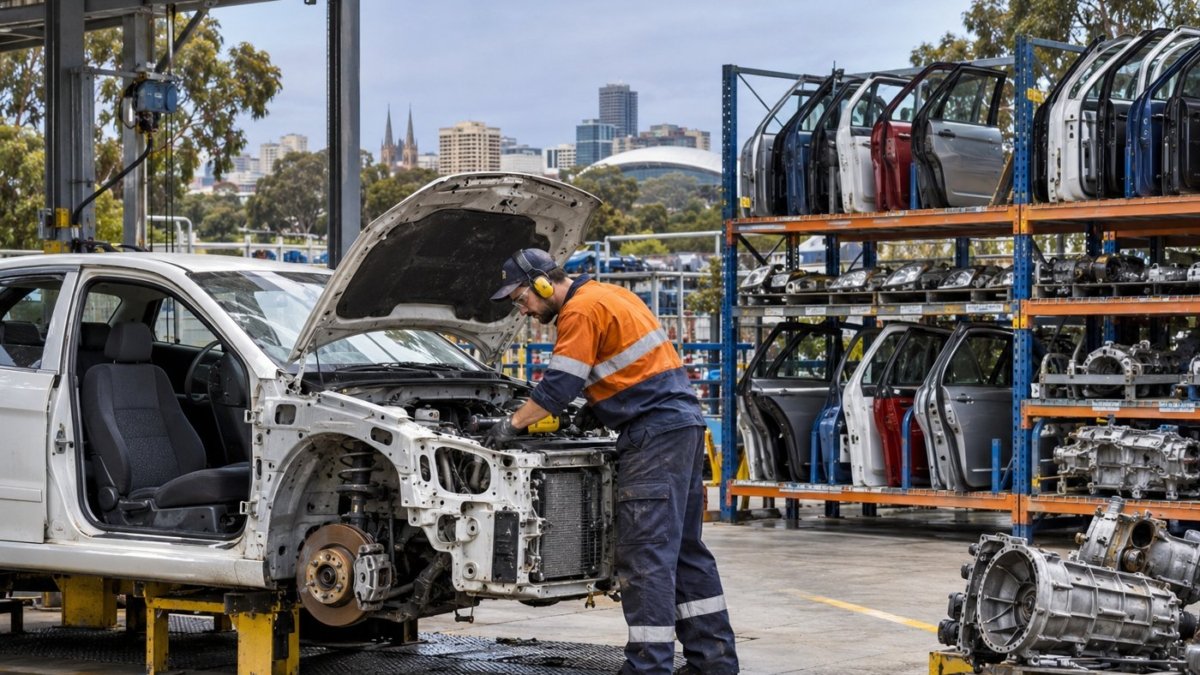
Quick answer: Motor vehicle recycling in Adelaide is the process of assessing an end-of-life vehicle, recovering suitable parts and directing remaining materials into appropriate recovery streams. It involves more than moving an old car out of a driveway. SA Wrecker is an Adelaide-based vehicle buying and removal business; describe your car and location to discuss a practical route from collection to assessment.
By SA Wrecker · Adelaide, South Australia · Updated 17 November 2026
What happens when a car reaches the end of its useful life?
An old car may no longer be economical for its owner to repair, but that does not mean every component has no value. Body panels, mechanical components and other parts may still be candidates for reuse after assessment. The remaining metal can be separated for recovery. Suitability depends on the actual vehicle and condition, rather than a blanket assumption that everything can be reused.
There is no single outcome for every car. A complete vehicle, a collision-damaged car and a partially stripped shell have different recovery possibilities. When you enquire, describe what remains fitted and provide photos. This helps the team assess the vehicle instead of relying on a generic scrap-car label.
Collection is the first practical step
Tell SA Wrecker where the car is parked, whether it rolls and steers, and whether access is clear. A recycling enquiry still needs a safe transport plan. A car that has been stationary for years may have flat tyres, seized brakes or items stored around it, even if it was running when parked.
Do not attempt to drive an unsafe car merely to get it to a yard. Explain missing wheels, inaccessible parking or leaking fluids before a collection is arranged. If you want to deliver a vehicle yourself, confirm acceptance, arrival arrangements and any requirements with the team first.

Assessment separates reusable parts from unsuitable components
Reuse starts with identifying the vehicle accurately. Make, model, build year, engine type and part numbers can matter when deciding whether a component suits another car. A part that looks similar is not automatically interchangeable. Condition and compatibility must be assessed before reuse.
For sellers, this explains why two vehicles with similar weight may attract different offers. Completeness and recoverable parts can influence the assessment alongside metal value and collection requirements. For buyers seeking a part, exact vehicle information is more useful than asking only whether a brand is available.
Why fluids, batteries and tyres need separate attention
Vehicles contain materials that should not simply be mixed into a pile of scrap metal. Oils, coolant, fuel, batteries and tyres require suitable handling and recovery or disposal pathways. The general recycling sequence includes controlling these materials before further dismantling and metal processing. This article describes the process broadly, rather than claiming a particular certification or recovery percentage for the business.
Leave hazardous handling to people with the appropriate equipment and procedures. Do not drain fluids into soil or stormwater, open a fuel system or disturb a damaged high-voltage battery to prepare a car for sale. Tell the collector about a leak, fire damage, unusual smells or an electric or hybrid powertrain.
Metal recovery follows the vehicle assessment
After reusable components and materials requiring separate handling have been addressed, remaining ferrous and non-ferrous metals can enter suitable recovery streams. The exact pathway depends on the vehicle and the facilities involved. Recycling an old car is therefore a series of decisions about different materials, not a promise that every gram becomes a new product.
Ask practical questions about the process rather than relying on unsupported green claims. You can ask how the vehicle will be assessed, whether parts are considered for reuse and which materials need separate treatment. SA Wrecker can discuss the service available for your car and arrange the agreed next step.
Prepare your car and records before collection
Remove belongings and personal data when it is safe, identify any accessories you are keeping and gather the paperwork requested by the team. Confirm the agreed offer and whether collection is included. Keep a written record of the sale and address registration and insurance matters separately using current official guidance.
The business lists 84 Churchill Road North, Dry Creek SA 5094 as its Adelaide location. Collection coverage depends on the actual pickup address, so provide your suburb and postcode. An accurate enquiry helps connect the environmental aim of recovering useful materials with the practical job of removing the vehicle.
Send a useful vehicle enquiry
Copy these details into your message: pickup suburb and postcode; make, model and year; running condition; missing parts; whether the car rolls and steers; keys; access restrictions; preferred collection date. Include current photos and a contact number.
Call 0470 313 096 · WhatsApp SA Wrecker · Contact the Adelaide team
Related Adelaide services and guides
- Adelaide car wreckers
- Car disposal in Adelaide
- Used car parts fitment checklist
- Turn Salvage and Broken Cars into Cash in Adelaide: An Offer Checklist
- Cash on the Spot for Unwanted and Broken Cars in Adelaide
Frequently asked questions
What is motor vehicle recycling?
It is the assessment and processing of an end-of-life vehicle so suitable parts and materials can be recovered, with fluids and other materials handled separately.
Can a car that does not run be recycled?
A non-running vehicle can be assessed. Explain its condition, completeness, location and loading access when requesting a quote and collection.
Does every part of an old car get reused?
No. Reuse depends on condition and suitability. Some materials can be recovered through other processes, while others need appropriate disposal.
Should I remove the battery or drain fluids first?
Do not undertake hazardous dismantling simply to prepare a sale. Describe the vehicle and ask the team what preparation is needed.
Are electric and hybrid cars the same as ordinary scrap cars?
They need particular attention because of high-voltage systems and battery condition. Identify the powertrain and any battery damage before collection is discussed.
Why can two scrap cars have different values?
Make, model, condition, completeness, usable parts, metal value and collection requirements can differ. Request an individual assessment.
Where is SA Wrecker based?
SA Wrecker lists its address as 84 Churchill Road North, Dry Creek SA 5094. Call before travelling to confirm the arrangements relevant to your enquiry.
How do I request vehicle recycling in Adelaide?
Call 0470 313 096 or use the enquiry form. Send your suburb, vehicle details, condition and photos so the team can discuss assessment and collection.
Request an assessment from SA Wrecker
Tell the team about your vehicle and pickup location. Quotes, payment arrangements, collection coverage and appointment times are confirmed directly for your enquiry.